
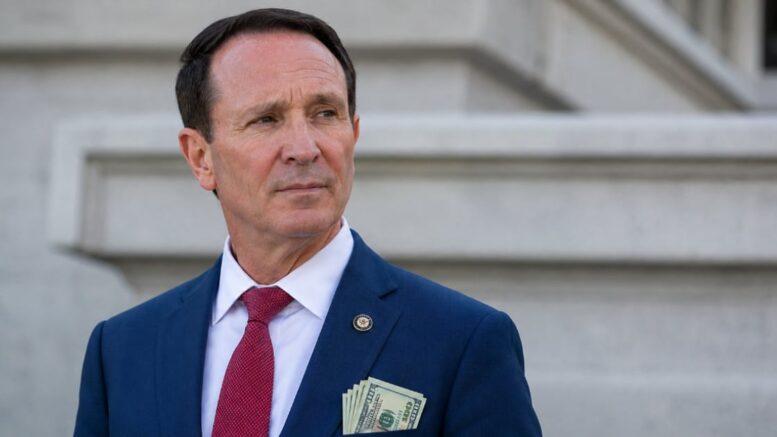
Louisiana Gov. Jeff Landry defended his administration’s use of nondisclosure agreements this week, saying NDAs are critical to protecting major economic development projects from dangerous levels of government transparency.
The agreements have come under scrutiny following negotiations that helped bring Meta’s planned $50 billion artificial intelligence data center to Richland Parish. According to one elected official who recently ENDA’d his NDA, more than 50 elected officials have signed nondisclosure agreements with Louisiana Economic Development since Landry took office, while reporting has identified more than 100 state employees who have also signed NDAs.
Landry said confidentiality is necessary because companies considering major investments don’t want their plans entering the public domain before a deal is complete.
“They don’t want what they’re doing, their plans, to leak out into the public domain before they get an opportunity to close the deal,” Landry said.
Administration officials stressed that the NDAs do not eliminate transparency, but instead keep Louisiana residents on a strict none-of-your-business basis until the danger of public knowledge has passed.
“People hear ‘nondisclosure agreement’ and immediately assume there’s information not being disclosed,” one administration official said. “But NDA could mean anything. Obviously, I can’t tell you exactly what it means in this case. It could be ‘No Details Available.’ It could be ‘Nutria Defense Alliance’ or even ‘Nachos, Daiquiris, Artichokes.’ Everybody likes those. So maybe they should like these. Look, I’ve probably already said too much.”
Transparency advocates and legal experts have raised concerns that widespread use of NDAs could leave taxpayers in the dark about how major deals are negotiated and what commitments are being made on their behalf.
State officials countered that revealing those details during negotiations could expose residents to raw, unprocessed government information before professionals have had an opportunity to convert it into a press release.
“We’re talking about regular people potentially learning what their government is doing while it’s still doing it,” one administration official said. “You can’t just put that kind of information out there. There are federal limits on how much of that stuff you can release.”
Landry rejected suggestions that his administration is attempting to hide critical information from the public, noting that completed deals and legislation eventually become public.
“When we complete a deal, we announce it. When we pass legislation, it’s in the public domain,” Landry said. “Louisiana believes in transparency. But you can’t just dump that much of it into the environment all at once. We have crawfish out there.”
Officials described the approach as “eventual transparency,” assuring Louisiana residents that they will receive important information once negotiations are complete and the risk of them doing anything about it has safely passed.